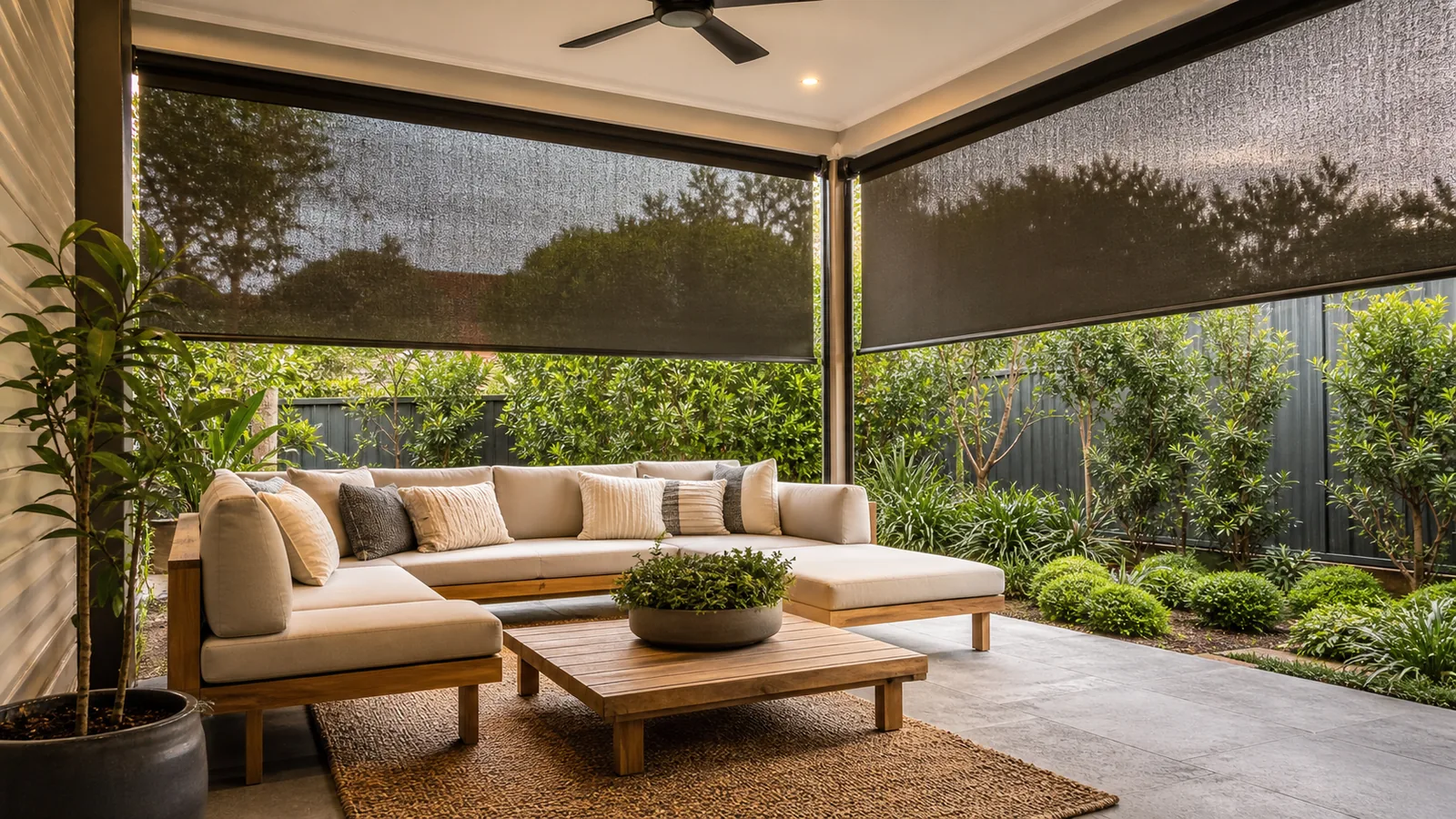
Mark the sun that actually interrupts your patio
Start with the place you want to sit, rather than the full size of the roof. At the time the patio becomes uncomfortable, note where direct sunlight reaches the chair, tabletop and adjoining glass. Photograph the edge of the shade from a safe position and write down the time. Repeat on another day when you use the patio differently. These observations help distinguish direct sun on people from glare off a pale surface or heat associated with the adjoining room. They also show whether a single opening is responsible for most of the problem.
For a west-facing Cairns patio, the troublesome period might be afternoon tea, children's outdoor play or preparing dinner. Tell the supplier which activity matters and whether you need shade while standing, sitting or looking at a screen. A blind lowered far enough to shade a dining chair may still leave a standing person in direct light. Conversely, shading the whole opening to the floor may sacrifice a garden view that could be retained with a different operating position. A useful brief names the activity and the required shaded area before it names a product.
Understand the difference between overhead and side shade
An overhead awning changes the shade above and beyond the roof edge. A vertical blind changes the light entering through the side opening. The Australian Government's Your Home shading guide explains why low-angle east and west sun needs particular attention. For your patio, ask the supplier to draw the sun path through the opening at the time you recorded. That drawing should show where an overhead projection would cast shade and where sunlight could still pass beneath it towards the seating or glass.
Do not choose between an awning and a blind from a photograph showing midday shade. Ask what happens later in the afternoon and whether the proposed treatment covers the activity you identified. An existing roof may already do much of the overhead work, leaving one open side as the problem. In another layout, extra projection may be useful over an uncovered section used for meals. Have each option marked on the same sketch with the table and chairs in place. Comparing the area made useful is more informative than comparing fabric area alone.
Distinguish glare from the loss of a view
Sit behind a fabric sample and look towards the actual source of discomfort. That could be the bright sky, a neighbour's pale wall, pool surrounds or paving. Then look towards the view you want to retain. A fabric that makes one direction comfortable may make another feel too closed. Take the sample back inside and look through the patio from the living room as well. The experience of the adjoining room matters if the blind will remain lowered for much of the afternoon. Record the exact sample code so the test can be repeated.
Avoid treating colour alone as a performance specification. Ask for the fabric maker's data for the nominated range and discuss it alongside your sample observations. Different materials with similar colours can serve different purposes. A tinted clear material and a woven screen also give different views, so compare actual samples rather than assuming one is simply a darker version of the other. The supplier should help connect the chosen fabric to the problem you described without promising a fixed indoor temperature reduction that has not been assessed for your home.
Decide which side should remain open
Sketch how you normally move through the patio and which direction you value for outlook and air movement. You may want the western drop down while keeping the garden frontage open. Ask whether the proposed sections can operate independently and whether their controls are clearly labelled. A system that moves every blind together can be convenient for some routines and frustrating for a patio where different sides do different jobs. Demonstrate the normal afternoon arrangement before choosing grouped controls or a full wrap of matching fabric.
In Earlville or Smithfield, the shade problem may be influenced by an adjacent fence, garage or extension as much as by the compass direction. Describe the actual surroundings rather than expecting the suburb name to determine the product. If the side opening also serves as the main route to the garden, consider a dedicated access section. Raising the entire shade every time someone walks through may undermine the reason for installing it. Our opening layout guide works through this access decision in more detail.
Check the adjoining glass separately
If your concern includes an indoor room behind the patio, mark the windows and doors on the sketch. Ask when direct sunlight reaches them and whether the proposed blind intercepts that path. Do not assume a blind positioned to shade the outdoor table also shades all the glass. A return panel, a different mounting line or an independently controlled section may need discussion. Make clear whether the priority is the indoor room, the patio or both, so the supplier can explain any compromise rather than presenting one attractive rendering as the answer.
Also check the daylight you still want inside when the weather is overcast or the patio is not being used. You may prefer an operable treatment that can be raised fully rather than a permanent addition across the whole frontage. Think about who will operate it and from where. If the control is outside behind a heavy table, a theoretically adjustable shade may become something that simply stays down. A good layout makes the sensible daily routine easy, whether that means a reachable manual handle or an appropriately specified motor and local control.
Locate the housing and the lowered bar
Ask the installer to show the complete blind in both positions. When raised, where does the roll or cassette sit relative to the roof edge, door frame and view from indoors? When lowered, where does the bottom bar sit relative to chairs, a barbecue, a garden bed and a door swing? A blind can solve the light problem while creating a circulation problem if these positions are not considered together. Use your existing furniture positions on the drawing and identify anything you genuinely intend to move before installation.
Discuss whether the blind is face-mounted or fitted within the opening and what that means for clear space. The installer should determine suitable fixing arrangements; a trim board or decorative surface should not be assumed to be an adequate support merely because it occupies the desired position. If additional framing is needed, have it shown and priced. Ask whether it changes the visible opening when the blind is raised. This helps prevent a late decision in which the final support detail is chosen after you have already approved the appearance and fabric.
Keep weather operation separate from sun control
A comfortable shaded setting can tempt people to leave a retractable product in the same position all day. Ask for the specific manufacturer's instructions for wind, rain and unattended use, and make sure the household can follow them. The installer should explain the operating routine for the actual product and opening. A sun-control decision is not evidence that a shade can remain deployed through every change of weather. This distinction matters when a Cairns patio is used casually and the people who lower the blind leave home before conditions change.
If sensors are proposed, ask what they detect, where they are mounted and what happens when power or communication is unavailable. Confirm the intended response rather than assuming every sensor operates every type of blind in the same way. A demonstration should show the normal user controls and the procedure for changing automatic settings. Keep the instructions accessible to anyone who looks after the home while you are away. The separate folding-arm awning guide addresses the broader awning choice; this page focuses on the shade pattern you need.
Check shade with the table in its working position
Pull the dining chairs out and place the table where it sits during a meal before taking your photographs. A table pushed against the wall for cleaning can appear well shaded while diners at its outer edge still face direct sunlight. Include the place where someone stands to serve food, and any screen used from the seating area. If you move furniture seasonally, show both arrangements. This gives the supplier a practical target for the shade line and helps you decide whether an independently lowered side drop is useful or whether the proposed mounting line needs reconsideration.
Use a comparison based on an ordinary afternoon
Ask each supplier to explain the proposed system against the same marked photographs. Where will the edge of the shade be at your dining seat? Which view remains? Which opening stays available for access? What must you do when you want the patio fully open? These questions make it easier to compare a side blind, an awning or a combination without reducing the decision to the biggest product. If an answer depends on a site measurement or another assessment, have that recorded before committing to fabrication.
A useful final specification names the mounting line, fabric, operation and independently controlled sections, with the furniture and adjoining glass shown on the drawing. Keep the chosen sample and photographs with it. At handover, check that each drop can be stopped and operated as agreed and that the lowered bar does not interfere with your normal route. Then observe the next comparable afternoon and report any specific difference from the agreed shade brief. This is a clearer discussion than trying to judge the installation solely by how enclosed the patio feels.
It is also worth deciding what happens outside the troublesome hours. You may want morning light for breakfast, a clear view while working inside and shade only when the afternoon sun arrives. Explain that sequence to the supplier so the solution supports the whole day. The right purchase may involve treating only the affected opening and leaving the rest alone. A detailed, modestly sized shade brief can be more useful than a full patio enclosure if the latter closes views and access that were never part of the original problem.
Your discussion checklist
Tick the details you have checked. The remaining items become your questions for the supplier. This list stays in your browser and is not submitted.
All listed details are worth discussing before ordering.
Questions answered
Will an overhead awning always stop late sun?
Ask for the shade to be shown at the relevant time. Low sun may still enter beneath the projection, depending on the opening and surroundings.
Should every patio side use the same material?
Only if it suits each side. Review the appearance together, but allow different needs for outlook, privacy and direct sun.
Can a shade quote guarantee my electricity savings?
A blind quotation alone does not establish household energy savings. Request the basis of any claimed figure rather than treating it as a certain outcome.
Discuss the opening you actually use
Send a photograph showing where afternoon sun reaches your table or windows. Describe the time and activity you want to make more comfortable.
Call about your blinds Send opening details